


A yearbook headline has an important job.
It should help readers understand what the page is about, but it can also give them a reason to keep reading.
That is where simple event labels sometimes fall short.
Homecoming. Science Fair. Fall Concert.
Those names tell readers what happened.
A stronger headline can tell them what made it interesting.
1. Start With the Story, Not Just the Event
The event name can still appear on the page.
It just does not always need to be the main headline.
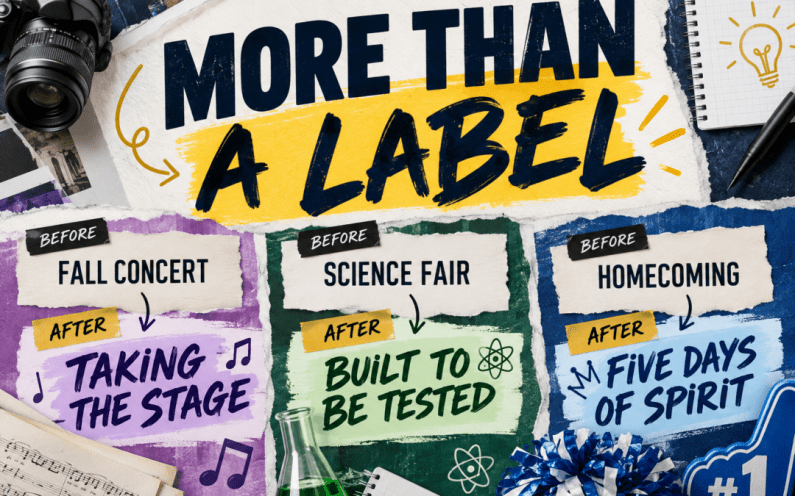
Instead of: Fall Concert
You might use: Taking the Stage
Instead of: Science Fair
Try: Built to Be Tested
Instead of: Homecoming Week
Try: Five Days of School Spirit
The goal is not to make every headline clever.
It is to give the reader something more than information they probably already know.
2. Let the Page Tell You What the Headline Should Be
Sometimes teams try to write the headline before they know what the page is really about.
That can make the headline feel generic.
Look at the finished photos, quotes, captions, and details first.
What stands out?
Was there an unexpected result?
A funny moment?
A first-time accomplishment?
A challenge students had to overcome?
That angle can often lead you to a better headline.
For example, a basketball page might not really be about “Basketball Season.”
Maybe the story is about a comeback.
Maybe it is about a new coach.
Maybe it is about a team that never gave up.
The headline should reflect the story you actually ended up telling.
3. Keep It Short Enough to Make an Impact
A headline does not need to explain the entire page.
That is what captions, quotes, and stories are for.
Shorter headlines are often easier to design and quicker for readers to understand.
Try to avoid headlines that become full sentences.
Instead, look for a few words that capture the idea.
Think:
- One More Round
- Worth the Wait
- Under the Lights
- Ready to Perform
- Made to Compete
- A Different Kind of Win
The best headline is usually the one that gives the page personality without trying too hard.
Final Thought
The event name tells readers where they are.
The headline can tell them what is worth noticing.
Start with the story.
Look for the angle that makes this year’s version different.
Then keep the wording simple enough to let the rest of the page do its job.
A good headline does not just label the page.
It helps pull readers into it.
Give Every Page a Stronger Voice
YearbookLife gives schools flexible creation options, easy-to-use software, expert support, and high-quality printing to help yearbook teams bring photos, stories, and design together in one complete book.
Ready to start creating your school’s yearbook? Request your free, no-obligation quote today at YearbookLife.com.
Click HERE
