


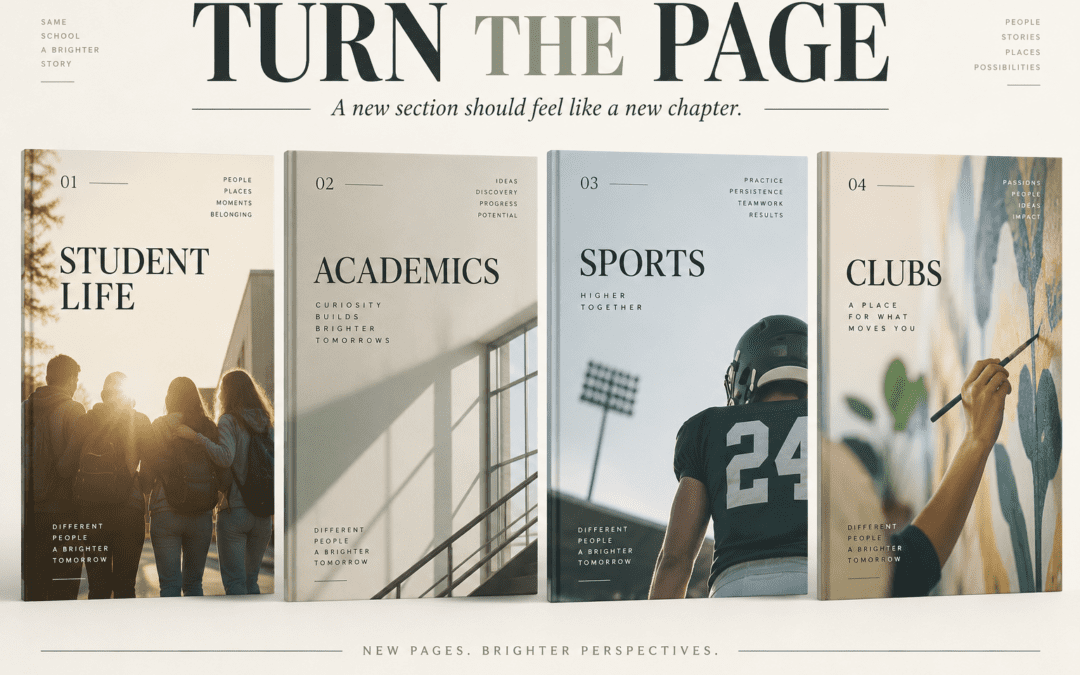
Divider pages are easy to overlook.
They are not usually packed with photos, captions, scores, or quotes.
But they still have an important job.
A good divider page gives readers a clear transition from one section of the yearbook to the next. It helps the book feel organized, gives the reader a visual pause, and creates another opportunity to carry the theme through the book.
The key is knowing what actually belongs there.
1. Introduce the Section Without Repeating the Cover
A divider page should tell readers where they are going next.
That might be:
- Student Life
- Academics
- Sports
- Clubs & Organizations
- Portraits
- Special Events
The section name should be easy to find.
But the divider does not need to look like a smaller version of the yearbook cover.
Instead, use the overall theme as inspiration and give each section its own variation.
For example, the same typography, colors, shapes, or graphic elements can continue throughout the book while each divider introduces something new.
The goal is connection, not repetition.
2. Give the Reader a Visual Reset
Most yearbook spreads contain a lot of information.
Photos.
Captions.
Names.
Stories.
Headlines.
A divider page gives the reader a chance to pause before entering a new section.
That means it can often be simpler than the pages around it.
You might use:
- One strong photo
- A short section title
- A simple graphic
- A brief quote
- A small piece of theme-related copy
You do not have to fill every available space.
A little breathing room can help the divider feel intentional and make the beginning of the next section stand out.
3. Use the Divider to Carry the Theme Forward
Divider pages are one of the best places to reinforce the yearbook theme.
That does not mean repeating the exact same design each time.
Instead, look for small elements that can continue from section to section.
That might include:
- A recurring font
- A consistent color system
- A repeated graphic
- Similar photography treatment
- A short phrase connected to the theme
- A recognizable layout element
Each divider can feel slightly different while still belonging to the same book.
That balance helps the yearbook feel connected from beginning to end.
Final Thought
A divider page does more than separate sections.
It helps readers understand where they are, gives the book visual rhythm, and creates another opportunity to strengthen the overall theme.
Keep it clear.
Keep it intentional.
And remember that it does not need to compete with the pages around it.
Sometimes a divider works best when it simply gives the reader a moment to reset before turning the page.
Bring Every Section Together
YearbookLife gives schools flexible creation options, easy-to-use software, expert support, and high-quality printing to help yearbook teams bring every section of the book together.
Ready to start creating your school’s yearbook? Request your free, no-obligation quote today at YearbookLife.com.
Click HERE
