


Starting a school yearbook can feel overwhelming when you are new to the role. Most advisors step into the position with limited time, limited help, and a long list of questions about where to begin. The good news is that the process becomes much easier once you understand the basic steps, the timeline, and the support you can rely on from your yearbook publisher.
If you are preparing to create a yearbook for the first time, this guide walks you through each stage of the process so you can move forward with confidence.
What Starting a Yearbook Really Means
Creating a yearbook is not just about designing pages. It begins with understanding your goals, knowing who will be involved, and having a plan for collecting content throughout the school year. Advisors who start with a clear structure find the experience far more manageable.
Before anything else, you will want to clarify a few important details:
- What the school expects the book to include
- When the book must be delivered
- Who will help gather photos and information
- How many pages your book will have
Establishing this foundation early makes the rest of the process smoother.
Step 1: Get Support from Your School Administration
Your first step is to speak with your principal or administration about the yearbook plan. Confirm that you are the designated advisor, understand the school’s expectations, and identify any guidelines you need to follow.
It also helps to find out:
- Whether your school keeps previous yearbooks you can review
- Whether you will have access to school photography resources
- Whether a student team or club already exists
This gives you a clearer picture of what support is already in place.
Step 2: Choose Your Yearbook Publisher
Choosing the right yearbook publisher is one of the most important decisions you will make. A strong publisher provides the tools, training, and support that make the entire process easier from start to finish.
Here are some initial questions you should be asking when looking for a yearbook publisher. These include things like available design tools, customer support, printing options, ordering systems, and deadlines. Understanding these basics early helps you choose a partner that fits your school’s needs.
A good yearbook publisher offers:
- An easy-to-use design system made for schools
- Helpful training and guidance for new advisors
- Clear communication throughout the year
- Reliable production and print quality
- Ordering options that simplify the process for parents
When a yearbook publisher provides this level of support, advisors have a smoother experience and students benefit from a better final product. Many first year advisors choose YearbookLife because it offers the tools and support needed to make the process manageable. See what schools around the country are saying about their experience in YearbookLife’s Google Reviews.
Step 3: Outline the Vision for Your Yearbook
With your publisher selected, you can begin shaping the direction of your book. This is where you define the overall look, feel, and structure.
Consider:
- Theme ideas
- Color palette and style
- Required sections
- Estimated page count
- Cover / binding type
You do not need every detail finalized yet. The goal is to establish a clear vision that guides the rest of your work.
Step 4: Organize Your Yearbook Team
If your school has a yearbook staff or club, gather the group and assign roles based on each person’s strengths. If you do not have a student team, identify teachers or volunteers who can help.
Common roles include:
- Page designers
- Photographers
- Editors or writers
- Proofreaders
Even a small team can greatly reduce your workload.
For a full breakdown of the typical roles on a yearbook staff and who handles what, check out the following blog: Yearbook Staff — Who Does What?.
Step 5: Build a Timeline You Can Follow
Staying on schedule is one of the biggest challenges for new advisors. Creating a simple, realistic timeline from the start makes a significant difference.
Your timeline should include:
- Important school events
- Photo collection periods
- Submission deadlines
- Review and proofing windows
Most publishers provide suggested timelines to help you stay organized.
If you’d like a ready-made month-by-month plan to reference, check out this yearbook planning timeline guide.
Step 6: Start Collecting Photos and Content
Begin gathering photos and information as early as possible. Consistent content collection throughout the year will make your job far easier when it is time to design the pages.
Collect photos from:
- Classrooms
- Sports teams
- Clubs
- School events
- Teachers and staff
Encourage parents and teachers to share photos regularly so you are not rushing later.
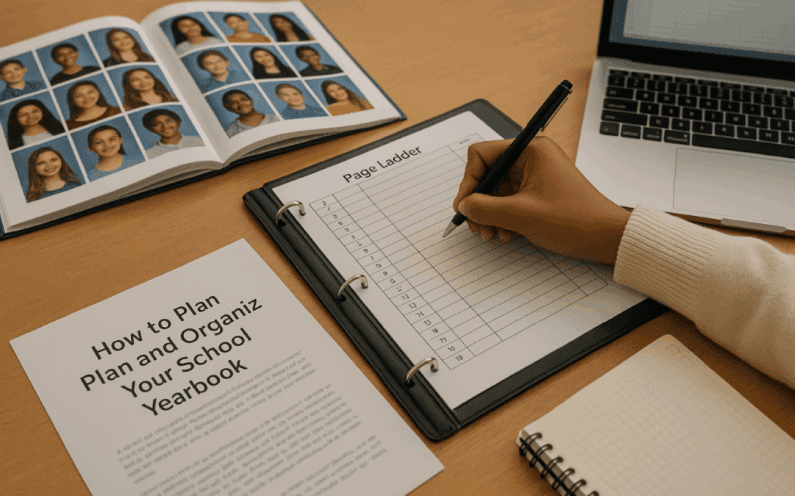
Step 7: Organize Your Pages
Plan the layout of your pages by using a Page Ladder or other planning tool, like a spreadsheet, to help you outline what content will go on each page. This will help you better organize your pages and give you an understanding of how many pages you’ll need to include all your content. Most yearbooks include the following pages:
- Portrait pages by classroom or grade
- Staff portrait pages
- Activity and Event Pages
- Clubs/Sports
For a more detailed idea of what pages are traditionally included in a yearbook, check out this yearbook organization blog.
Step 8: Begin Designing Your Pages
The best approach is to keep the design simple, clean, and consistent. Focus on:
- Using templates to maintain balance
- Keeping fonts consistent
- Prioritizing clarity over complexity
- Highlighting student experiences
Your yearbook publisher will likely offer templates and tools that make page design easier, especially for beginners.
Step 9: Proof, Revise, and Finalize
Reviewing your yearbook carefully is essential. Build in time for multiple rounds of proofing.
This process should include:
- A full review by you
- A review by your team
- A final check by administration if required
Catching errors early ensures a polished and accurate final book.
Final Steps: Submit Your Book and Prepare for Distribution
Once your pages are finalized, follow your publisher’s submission steps. After the book is submitted, the printing process begins. Many advisors use this time to plan distribution, gather volunteers, and communicate with families.
When the yearbooks arrive, you will be ready for a smooth and organized distribution day.
Get Started with YearbookLife!
Starting a school yearbook becomes much easier when you understand the process and have the right support behind you. Whether you are a first year advisor or returning to the role, a clear plan and a supportive yearbook publisher make each step manageable.
YearbookLife provides the tools, guidance, and resources you need from the first planning stages to the final printed book. Make your next yearbook simple, creative, and memorable with YearbookLife. Contact us today or request a free quote for your school.
Frequently Asked Questions
What do I need to start a school yearbook?
You need approval from your administration, a yearbook publisher, a general plan for the book, and a simple timeline for collecting content.
What should a yearbook include?
Most yearbooks include portraits, events, clubs, activities, sports, and custom pages specific to your school. Learn more.
How long does it take to make a yearbook?
The process typically spans the school year, depending on deadlines and how early you begin collecting content.
Who usually runs the yearbook at a school?
A teacher advisor usually leads the project with support from students, volunteers, or staff.
How many pages should a yearbook be?
Elementary and middle school yearbooks often range from 40 to 80 pages, while high school books may be longer. Your publisher can help determine the right range.
How do I sell my yearbook?
The best way to maximize sales is to start early in the school year. Early sales give you a clearer idea of how many books you will need to order and help you plan your budget more accurately. Most yearbook publishers, including YearbookLife, provide an online storefront, so families can purchase yearbooks directly. You can also promote sales through school newsletters, social media, email reminders, and classroom communication.
For more ideas on how to boost yearbook sales, check out this resource.
