


Every year, new yearbook trends show up—some make books more engaging and meaningful, while others don’t hold up past submission day.
The goal isn’t to follow every trend. It’s to focus on the ones that actually improve your book—and avoid the ones that don’t.
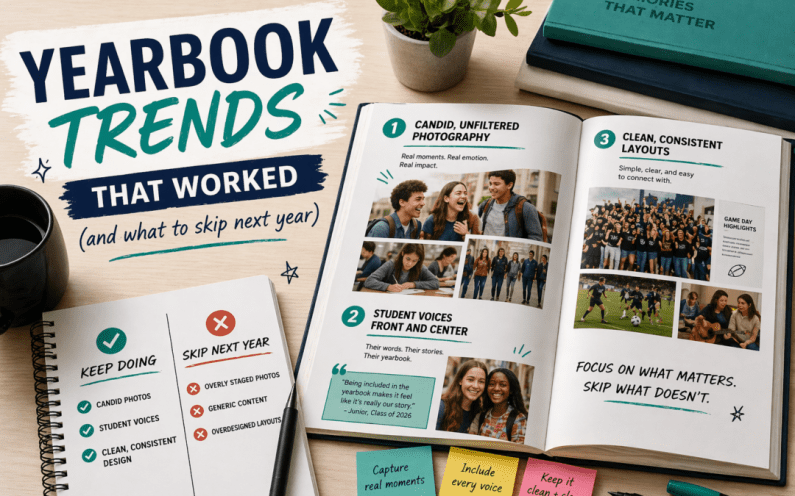
Here are the top 3 trends that worked this year—and what they tell you to skip next year.
What Worked This Year
1. Candid, Unfiltered Photography
Perfectly posed photos are becoming less important. What stands out now are real, in-the-moment shots.
Students connect more with photos that feel natural—laughing, reacting, and just being themselves.
Why it worked:
- Feels authentic and relatable
- Captures real emotion
- Makes the book more personal
Keep doing this:
Focus less on staging photos and more on capturing real moments as they happen.
2. Student Voices Front and Center
Yearbooks are shifting from simply documenting students to actually including them.
Short quotes, reactions, and personal insights are showing up across more spreads—and making a big difference.
Why it worked:
- Adds personality to every page
- Makes content more engaging
- Helps readers feel connected
Keep doing this:
Build quotes into captions, sidebars, and features whenever possible.
3. Clean, Consistent Layouts
Instead of busy, trend-heavy designs, teams are moving toward simpler, more structured layouts.
Clear organization is winning over visual clutter.
Why it worked:
- Easier to read and navigate
- Looks more polished
- Holds up better over time
Keep doing this:
Use consistent templates and let your content—not design trends—lead the page.
What to Skip Next Year (Based on What Worked)
The trends that worked all point to one thing: clarity and authenticity win.
So what should you avoid?
- Overly staged photos → They feel less real compared to candid moments
- Generic or missing student voice → Without real input, pages feel flat
- Overdesigned layouts → Too many elements distract from the story
The pattern is simple:
If it feels forced, cluttered, or generic—it’s probably not adding value.
Final Thought: Don’t Chase Trends—Use What Works
The best yearbooks aren’t built on trends—they’re built on good decisions.
When you focus on real moments, real voices, and clear design, you create something that feels relevant now—and still meaningful years later.
That’s what actually lasts.
Create a Better Yearbook with YearbookLife
YearbookLife gives your team the tools to stay organized, design with purpose, and create a book that reflects your school—not just the latest trend.
👉 Start building your yearbook with a platform designed to keep things simple, flexible, and effective.
Click HERE to get a quote today
